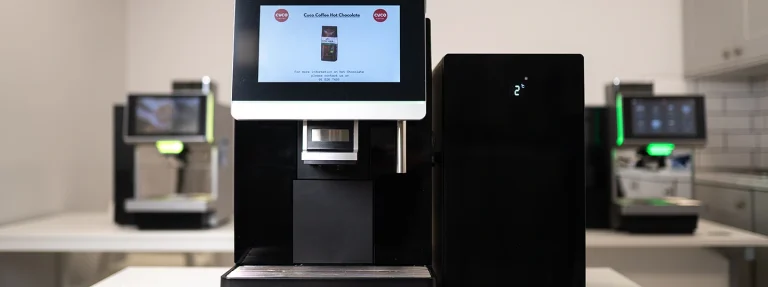
Coffee Machine Rental vs Lease vs Purchase: Which Is Right for Your Business?
If you’re looking into getting a coffee machine for your office, you’ve probably come across three options: renting, leasing, or buying outright. Each one works differently, costs differently, and suits different types of businesses. The trouble is, most suppliers don’t explain the differences very clearly, which makes it harder than it needs to be.
This guide breaks it all down in plain terms. We’ll walk you through what each option actually involves, where the real differences lie, and how to figure out which one makes the most sense for your situation.
The Short Answer
For the vast majority of UK businesses, renting a coffee machine is the smartest choice. With Cuco specifically, you get a fully serviced machine without the upfront cost, everything from installation to weekly maintenance is included, and you keep the flexibility to change or upgrade as your business grows. It’s the option that removes the most hassle and gives you the most predictable costs.
Leasing and buying have their place, but they come with trade-offs that many businesses don’t fully consider until they’re already committed. Let’s walk through how each option works so you can see why rental tends to come out on top.
What’s the Difference Between Renting, Leasing, and Buying?
These three terms get thrown around a lot, and people sometimes use them interchangeably. They’re actually quite different, especially when it comes to ownership, servicing, and flexibility.
Renting a Coffee Machine
When you rent a coffee machine, you’re essentially paying a regular fee to use it. The machine stays the property of the supplier throughout the agreement. You don’t own it, and at the end of the rental period, it goes back. For most businesses, that’s a feature rather than a drawback.
What makes rental the go-to option for so many businesses is the all-inclusive nature of the deal. With a good supplier, the rental fee covers delivery, installation and training. Servicing is where suppliers differ. Not every provider includes it, and plenty charge for it on top of the monthly fee. At Cuco Coffee, weekly on-site servicing is free with every rental package. An engineer comes to clean, maintain and restock the machine as standard, and emergency call outs and repairs are free as well if anything ever goes wrong. That means nobody in your office has to worry about looking after it. The coffee just works, every day, without anyone having to think about it.
Rental contracts are also far more flexible than leases. Cuco offer flexible short-term contracts of twelve months, against the two to five-year contracts common elsewhere in the market. Switching to a different machine model is usually straightforward if your needs change. If your team doubles in size and you need a bigger machine, or you move to a new office, a good rental supplier will sort that out without drama. That kind of adaptability is hard to get with any other arrangement.
Leasing a Coffee Machine
Leasing looks similar to renting on the surface. You pay a fixed monthly amount and you get to use the machine. But once you get into the detail, the differences start to add up, and not always in your favour.
With a lease, you’re typically entering into a finance agreement through a leasing company, not directly with the coffee supplier. The lease runs for a set period, usually between three and five years. At the end of the term, you’ll usually have the option to buy the machine outright for a small final payment, extend the lease, or upgrade to a newer model.
One thing that catches a lot of people out is that servicing and maintenance are not always included in a lease. With some providers, servicing is built in. With others, it’s a separate contract, which adds to the overall monthly cost. And because the leasing company, not the coffee supplier, holds the finance agreement, you can end up dealing with two separate companies when something goes wrong. That’s an extra layer of complexity that most office managers could do without.
Leases are also considerably less flexible than rental agreements. Ending a lease early almost always means paying a penalty, and those penalties can be steep. If your business circumstances change, perhaps you downsize or relocate, you could find yourself paying for a machine you no longer need. That’s a risk worth thinking about carefully.
Buying a Coffee Machine
Buying is exactly what it sounds like. You pay the full amount upfront, and the machine is yours. No monthly payments, no contracts, no ongoing obligations to a supplier.
The appeal of buying is clear: once you’ve paid for it, you’re done. There are no recurring fees eating into your budget month after month. You can use the machine however you like, move it to a different location, or sell it on if you no longer need it.
The downside is that you take on all the risk. If the machine breaks down, you’re responsible for arranging and paying for repairs. You’ll need to sort out your own servicing schedule, buy your own consumables, and deal with any issues that come up. For busy offices where the coffee machine gets heavy use, that can become a real headache.
Commercial coffee machines aren’t cheap, either. A quality bean to cup machine suitable for a medium-sized office is a significant investment, and that money is tied up in a depreciating asset from day one.
Side-by-Side Comparison
| Rental | Lease | Purchase | |
|---|---|---|---|
| Ownership | Stays with the supplier | Option to buy at end of term | Yours from day one |
| Upfront cost | None or very low | None or small deposit | Full machine cost |
| Monthly payments | Fixed regular fee | Fixed monthly payments | None |
| Typical contract length | Flexible: 3 months to 3 years | Fixed: usually 3 to 5 years | No contract |
| Servicing and maintenance | Usually included | Sometimes included, sometimes separate | Your responsibility |
| Flexibility to switch machines | High | Limited during term | You’d need to sell and buy again |
| Early exit | Easier, depending on terms | Penalty fees may apply | N/A |
| Tax treatment | Deductible as business expense | Payments often tax-deductible | Capital allowances may apply |
| Best for | Most businesses wanting a hassle-free solution | Businesses wanting eventual ownership | Businesses with capital to invest and in-house maintenance capability |
Pros and Cons of Each Option
Renting: Pros
- No large upfront payment. Your budget stays intact for other priorities.
- Servicing, maintenance, and restocking are typically included in the fee, so there is very little for you to manage.
- Shorter and more flexible contract lengths. If your business grows, moves, or your needs change, you can adjust more easily.
- If the machine develops a fault, the supplier handles the repair. You do not have to chase engineers or pay call out fees.
- You get access to a quality machine from day one without the heavy financial commitment.
Renting: Cons
- You never own the machine. At the end of the agreement, it goes back to the supplier.
- Over a very long period, the total cost of renting may be higher than buying outright.
- You are tied to the supplier’s range of machines and coffee blends, although most good suppliers offer plenty of choice.
Leasing: Pros
- Low or no upfront cost, similar to rental.
- Fixed monthly payments make budgeting straightforward.
- At the end of the term, you can usually buy the machine for a nominal fee, giving you eventual ownership if you want it.
- Lease payments are often fully tax deductible as an operating expense, and if you are VAT registered, you can typically reclaim the VAT on each payment.
- Upgrading to a newer model at the end of the term is usually an option.
Leasing: Cons
- You are locked into a fixed term. Ending the lease early usually means paying a penalty, which can be significant.
- Servicing and maintenance may not be included. If they are not, you will need to arrange a separate contract or handle it yourself.
- The leasing company, rather than the coffee supplier, holds the agreement. If there is a dispute or the supplier changes, it can make things more complicated.
- Over the full term, the total cost, including interest, will be higher than buying the machine outright.
Buying: Pros
- Full ownership from the start. The machine is your asset.
- No ongoing payments, contracts, or obligations to a supplier.
- Freedom to choose any consumables, any engineer, and any coffee beans you like.
- Potentially the most cost effective option over the long term, provided the machine is well maintained.
- You can sell or relocate the machine whenever you choose.
Buying: Cons
- Significant upfront cost. A good commercial bean to cup machine is a substantial investment.
- All servicing, maintenance, and repairs are your responsibility, including the cost.
- If the machine becomes outdated or your business needs change, you are left with it unless you sell it.
- The machine depreciates in value from the moment you buy it.
- If nobody in your office knows how to troubleshoot basic issues, you could face downtime while waiting for an engineer.
Tax Benefits of Leasing and Renting a Coffee Machine in the UK
This is one area where renting and leasing both have a genuine edge over buying, and it’s something a lot of businesses overlook.
When you rent or lease a coffee machine, the payments are treated as an operating expense. That means they’re typically 100% tax-deductible against your business profits. If you’re VAT-registered, you can also reclaim the VAT on each payment, which effectively reduces the cost further.
The important thing to note here is that rental gives you the same tax benefits as leasing, but without the rigid contract terms or the risk of early termination penalties. You get the tax efficiency along with the flexibility, which is why rental is often the more practical choice for businesses that want the best of both worlds.
When you buy a machine outright, the tax picture is different. You may be able to claim capital allowances on the purchase, but it’s not as straightforward as simply deducting the payments from your taxable income. The machine goes on your balance sheet as an asset, and the tax relief is spread over time through depreciation.
For many small and medium-sized businesses, the ability to treat coffee machine payments as a fully deductible operating expense is a meaningful benefit. It keeps things simple from an accounting perspective and helps manage cash flow more effectively.
A word of caution: tax rules can change and every business’s situation is different. It’s always worth speaking to your accountant before making a decision based on tax considerations alone.

Which Option Is Right for Your Business?
While every business is different, rental comes out ahead for the majority of UK workplaces. Here’s a quick way to check which option suits your situation.
Renting is the best fit for most businesses, and here’s why:
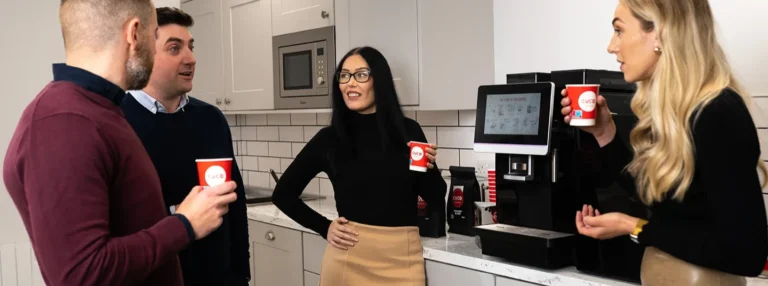
- You want a complete, managed solution where someone else handles the servicing, maintenance, and restocking.
- You would rather avoid a large upfront payment and keep your monthly costs predictable.
- You are not sure how long you will be in your current office, or your team size might change in the next year or two.
- You do not want the hassle of managing a machine. You just want good coffee, reliably, with as little effort as possible.
- You are a growing business and want the flexibility to upgrade to a larger machine as your team expands.
Leasing could work if:
- You are happy to commit to a fixed term of three to five years.
- You want the option to own the machine at the end of the agreement.
- You are comfortable arranging your own servicing, or you have confirmed that maintenance is included in the lease.
- Tax efficiency is a priority and you want to maximise deductible expenses.
Buying might suit you if (but think carefully):
- You have the budget available and would rather make a one off investment.
- You already have a relationship with a servicing engineer or have the ability to handle maintenance in house.
- You are confident the machine you are buying will meet your needs for the next five years or more.
- You value complete independence and do not want an ongoing relationship with a supplier.
For most offices in Manchester and across the UK, renting is the clear winner. You get a quality machine, regular servicing, and a single point of contact for everything. There’s no finance agreement to worry about, no separate maintenance contract to manage, and no risk of being stuck with equipment that doesn’t suit you any more. It’s the kind of arrangement where you can just get on with running your business and leave the coffee to someone who knows what they’re doing.
What to Look for in a Coffee Machine Supplier
Whichever option you go with, the supplier you choose matters just as much as the payment model. Here are some practical things to check before committing:
- Is servicing and maintenance included? Some suppliers include this as standard. Others charge extra or do not offer it at all. Weekly servicing is the gold standard for offices with heavy daily use.
- Do they use their own engineers or third party contractors? In house teams tend to be more reliable and responsive. If something goes wrong, you want someone who actually knows the machines turning up, not a general appliance repair person.
- What is the contract length and what happens if you need to exit early? Look for transparent terms. Some suppliers offer short minimum periods, which is a good sign of confidence in their service.
- Can you try the coffee before signing up? A good supplier will be happy to arrange a free tasting. If they will not, that should tell you something.
- Are they local? A supplier based near your office can respond faster when something needs attention. If you are in Manchester, having a Manchester based team on your doorstep can make a real difference to response times.
Ready to Rent the Right Coffee Machine for Your Workplace?
If you’ve read this far, rental is probably looking like the right fit, and for good reason. It’s the option that gives you the best coffee with the least effort. At Cuco Coffee, we’re based in Manchester and we work with businesses across this area to set up the right rental package for their workplace.
We’ll sit down with you, bring along some coffee for a free tasting, and help you figure out which machine suits your team. There’s no pressure, no obligation, and no long-term lock-in. Just good coffee and straightforward service.
Get in touch today to arrange a free coffee tasting, or give us a call on 0161 394 0703 to chat about your options.
How to Choose the Right Coffee Machine for Your Office: A Practical Buyer's Guide
Choosing a coffee machine for your office sounds like a simple decision until you start looking at the options. Some suppliers push whatever they happen to sell. Others throw technical specs at you that do not really help you work out what suits your team. And every workplace is different, so what works for a 15-person creative agency will not work for a 90-person manufacturing office.
This guide walks you through the decisions that actually matter. By the end of it, you will know how to match a machine to your team size, your space, and the drinks people actually want. We will also explain where each of our own machines, the Cuco 50, Cuco 100, and Cuco 200, fits best, so you can see whether they match what you have in mind.
No jargon. No sales pitch. Just the things you need to think about before signing a contract.
Step 1: Work Out How Much Coffee Your Team Actually Drinks
This is the first thing to get right, because getting it wrong is expensive in both directions. A machine that is too small will queue up at 9:15am and again at 2pm, frustrate your team, and wear out faster than it should. A machine that is too big costs more than it needs to, takes up space you could use for something else, and still produces the same cup of coffee.
The simplest calculation is cups per person per day. In most UK offices, it works out at around two cups per person, though that varies. Creative and client-facing teams tend to drink more. Manufacturing and warehouse offices drink less during the day but spike heavily at break times. Teams with a lot of remote or hybrid working need to think about their busiest in-office days, not their average.
Once you have an estimate, add a margin for visitors, client meetings, and the inevitable second cups. Then match that total to the right machine capacity.
Cuco 50: up to 50 cups per day
Our entry-level machine suits small offices, meeting rooms, and reception areas. It handles up to 50 cups a day comfortably. Teams of around 15 to 25 people typically sit well within this range. The machine serves 24 speciality drinks, which covers almost every request you are likely to get in a workplace setting.
A lot of our larger clients actually pair a Cuco 50 with a larger machine. The bigger one handles the main kitchen. The Cuco 50 sits in a meeting room or a separate floor where people do not want to walk across the office every time they fancy a coffee.
Cuco 100: 100 to 150 cups per day
The Cuco 100 is our mid-range machine. It is the one most medium-sized offices end up with. Think teams of around 30 to 50 people, or smaller teams where coffee consumption is particularly high. It also suits showrooms, canteens, and any workplace where there is steady demand throughout the day rather than huge peaks.
Like the Cuco 50, it offers 24 speciality drinks. The difference is in volume and resilience. The Cuco 100 is built to keep up when three or four people are back up at the machine at the same time, without slowing down or losing quality in the cup.
Cuco 200: up to 200 cups per day
The Cuco 200 is the machine for larger organisations and higher-traffic workplaces. It handles up to 200 cups a day and offers 31 speciality drinks, including iced coffees and one of the best hot chocolates you will find in an office setting. Teams of 70 and over will usually want this machine, as will offices with a lot of client foot traffic or any space where queues forming would be a real problem.
If your daily volume is pushing past 200 cups, it is usually better to add a second machine rather than stretch one beyond its comfortable capacity. A single overworked machine will cost you more in the long run through breakdowns and inconsistent drinks than two well-matched machines will.
Step 2: Think About Your Space and Setup
Coffee machines do not need a huge amount of room, but they do need the right kind of space. Before you commit to anything, walk over to where the machine is going to live and check a few practical things.
Counter space and clearance
A commercial bean to cup machine needs enough counter depth to sit back from the edge, and enough width on either side to load cups and beans without banging into walls or other appliances. You also need clearance above for the bean hopper. It sounds obvious, but we have seen offices try to squeeze machines into spots that left no room to actually refill them. When we visit your workplace for a free tasting, we will check all of this before recommending a model, so you do not end up with something that does not fit.
Power and water
All our machines run on a standard UK mains plug, so there is no complicated wiring to think about. Water is the part that catches people out. Some machines need a plumbed-in water supply. Others work off a tank that your team tops up. Plumbed machines are more convenient for high-volume sites because nobody has to remember to refill anything. Tank machines are easier to install and move around, which suits offices with less accessible plumbing.
Both options work well. The right choice depends on where the machine is going and how heavily it will be used. We will talk you through which setup fits your space when we visit.
Flow of traffic
This one is often overlooked. Put the machine somewhere people can reach without cutting through a workspace, crossing a meeting room, or creating a queue that blocks a corridor. The ideal spot is a kitchen or break area where people already go naturally. A side bench in a quiet corner of the main office also works well. Putting it anywhere that creates a bottleneck will cause friction, and your team will notice.
Step 3: Match the Drink Range to Your Team
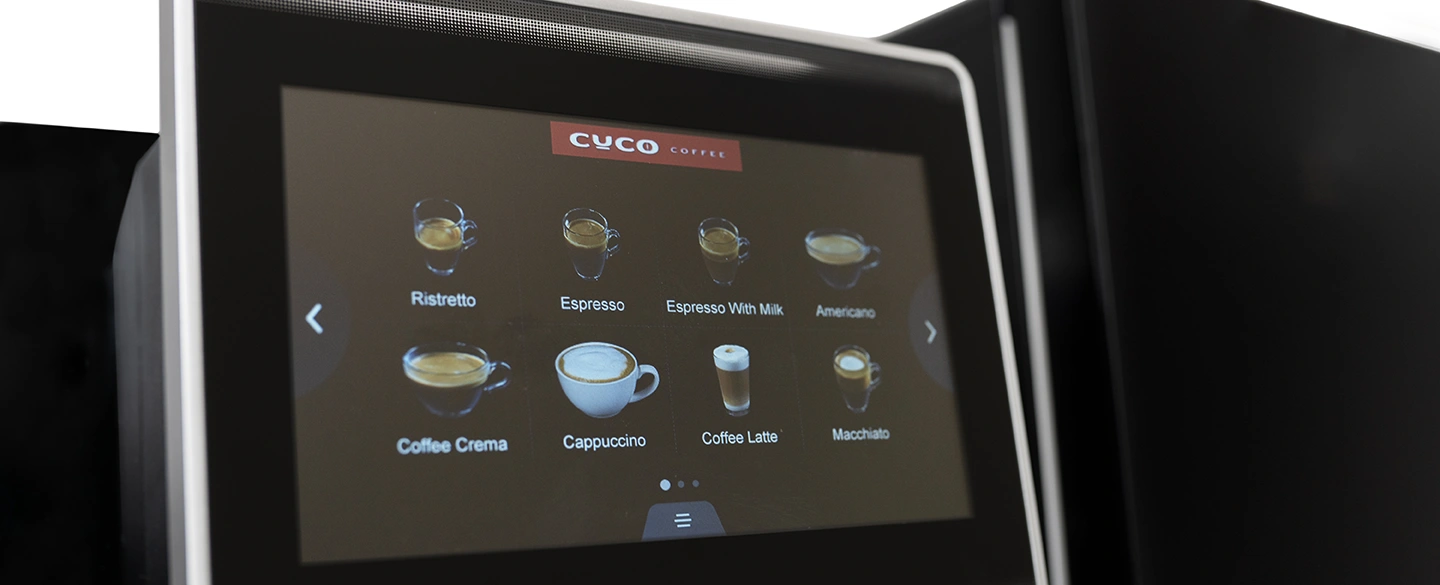
Once you have size and space sorted, think about what your team actually drinks. This is where a lot of decisions quietly go wrong. A machine that only does espresso and Americano will leave half your office unhappy in a culture where flat whites, lattes, iced coffees and hot chocolates are the standard request.
All our machines serve the core range: espresso, Americano, cappuccino, latte, flat white, macchiato, and hot chocolate, along with a choice of strengths and milk options. The Cuco 200 adds more variation and a wider menu of speciality drinks, which matters if you have a varied team or a lot of visitors.
A couple of things to check with your team before deciding:
- How many people drink tea regularly? Many UK offices still have a high tea to coffee ratio, so a hot water option matters. Our machines provide hot water on demand, and for workplaces where tea is a daily staple, we also offer a dedicated Cuco Water Boiler.
- Does anyone need dairy free options? Plant based milk support is worth asking about. If it is a priority, raise it with us and we will set the machine up to handle it properly.
- Do your clients or visitors drink coffee regularly? If you host a lot of meetings, presentation quality matters. A proper flat white from a bean to cup machine makes a different impression from instant coffee.
- Is hot chocolate something your team would want? It sounds minor, but a good hot chocolate option makes the coffee machine feel inclusive for people who do not drink coffee. The Cuco 200 is our strongest option here, and we also do a dedicated Cuco Hot Chocolate Machine for workplaces where it is a particular focus.
Step 4: Decide How You Want to Pay for It
Once you know which machine suits your team, the next question is how to get it. There are three options: renting, leasing, or buying outright. We covered the full comparison in our guide to coffee machine rental, lease, and purchase, but here is the short version.
Rental is the most flexible option. A monthly fee covers the machine, weekly servicing, and usually everything else you need to keep it running. You do not own the machine, but you also do not have to worry about anything going wrong with it.
Leasing works like a long-term finance agreement. You commit to a fixed term, usually three to five years, and often have the option to buy the machine at the end. Servicing may or may not be included depending on the agreement.
Buying means paying the full cost upfront. The machine is yours from day one. All servicing, maintenance, and repairs become your responsibility.
For most offices, rental makes the most sense. The cost is predictable, the hassle is minimal, and if your needs change, you are not locked into equipment that no longer fits. Our rental contracts start at three months, so there is no long commitment to worry about.
Step 5: Check the Service and Support
This is the part of the decision that too many businesses overlook, and it is the one that will affect you most once the machine is installed. A good machine poorly serviced will frustrate your team. An average machine well serviced will run reliably for years. Service is where the real difference between suppliers shows up.
Here are the things worth asking about before you sign anything:
Is servicing included, and how often?
Weekly servicing is the standard we work to. Every machine we install gets a visit from our own engineers every week to clean it, descale it where needed, replace filters, check the components, and restock beans and supplies. Some suppliers offer monthly or quarterly servicing, which is fine for light-use machines but not enough for a busy office. Find out the visit frequency before you commit.
Who actually does the servicing?
A lot of coffee machine suppliers subcontract their servicing to third-party engineers. That works until it does not. When something breaks, you end up waiting for a contractor who does not know the machine, the supplier, or your office. At Cuco, our servicing is done by our own team. The person who looks after your machine every week is a Cuco employee, trained on our range, and familiar with your office. That is the difference between service that works and service that just exists on paper. There is another cost that rarely gets mentioned. Some suppliers leave the cleaning cycles to the customer, which means somebody in your office standing at the machine for thirty minutes, away from the work they are actually paid to do. Our engineers handle that on the weekly visit.
What happens when something goes wrong?
No machine is perfect. They occasionally throw errors, develop faults, or need parts replaced. The real test of a supplier is how quickly they respond when that happens. Find out what the response time is, whether repairs are included in your contract or billed separately, and whether there is a backup machine available if yours is out of action for more than a day.
Can you try the coffee before signing up?
You would not commit to a car without a test drive. The same principle applies to an office coffee machine. Any supplier worth working with should offer a free tasting at your workplace. It lets you try the machines, sample the blends, and see how your team responds. At Cuco, we bring the machine, the coffee, and the expertise to your office. You tell us what you like, and we recommend a setup that fits. There is no pressure to commit on the spot.
Cuco 50 vs Cuco 100 vs Cuco 200: At a Glance
The easiest way to compare our three machines is to see them side by side. This table covers the main differences. If anything is unclear, the free tasting is the best next step.
| Cuco 50 | Cuco 100 | Cuco 200 | |
|---|---|---|---|
| Daily capacity | Up to 50 cups | 100 to 150 cups | Up to 200 cups |
| Speciality drinks | 24 | 24 | 31 |
| Ideal team size | 15 to 25 people | 30 to 50 people | 70+ people |
| Best suited to | Small offices, meeting rooms, reception areas | Medium offices, showrooms, canteens | Large workplaces, high-traffic sites, client-facing spaces |
| Pairs well with | Acts as secondary machine in larger offices | Good standalone option for most workplaces | Often paired with a Cuco 50 for secondary areas |
| Hot chocolate | Yes | Yes | Yes, broader range |
| Weekly service included | Yes | Yes | Yes |
A Quick Word on the Coffee Itself
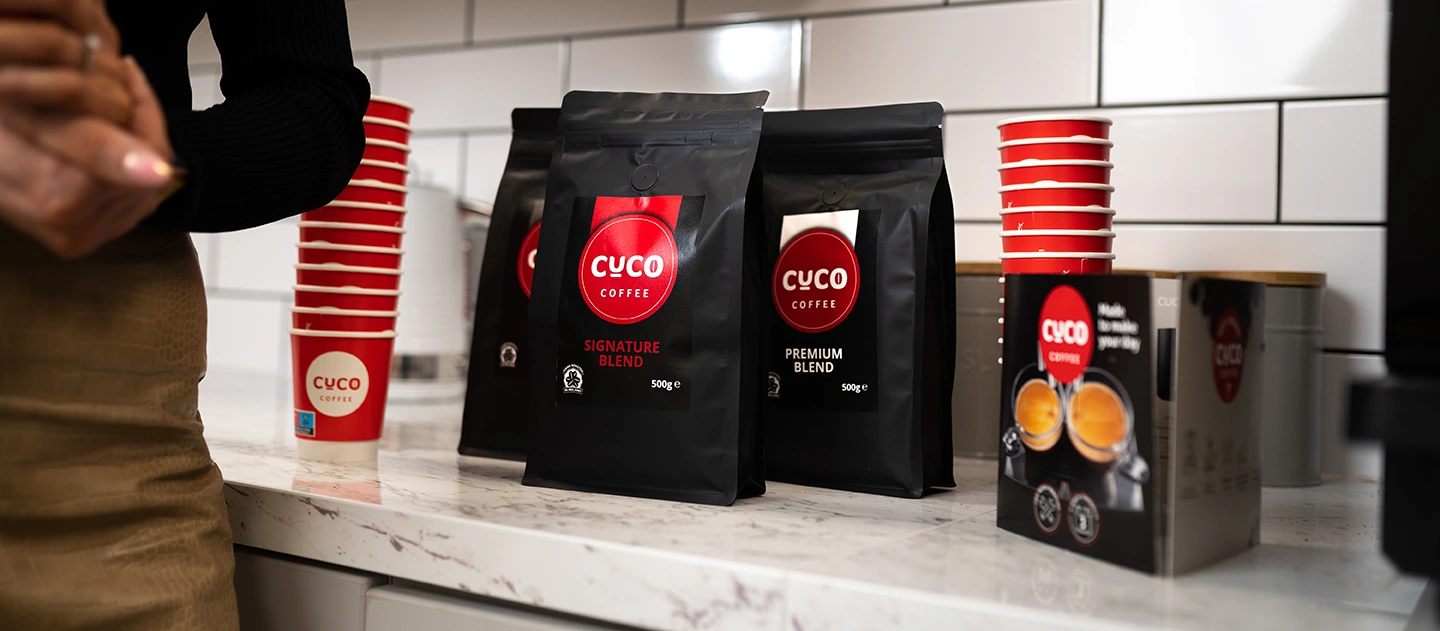
The machine is only half the story. The beans that go into it matter just as much. All our rentals come with a choice of our own blends, roasted exclusively for Cuco customers. There are four to pick from: Signature, Premium, Café, and Cremosa Single Origin. Each has its own character, and the right one for your office really comes down to taste.
When we visit for the tasting, we will bring all four and let your team try them. We also offer a free one-week trial, not just a tasting. The machine stays on site for the whole week, and we deliver several bags of coffee and hot chocolate with it, so your team can live with the machine rather than sample it once. Most offices settle on one favourite quickly. Some rotate between two. There is no right answer, and you can change blends later if your preferences shift.
Ready to Choose the Right Machine for Your Workplace?
If you have read this far, you probably have a pretty good idea of which machine suits your team. The next step is to see it in person. We will visit your office, bring the machines and the coffee, and talk through the setup that fits your space, your team, and your usage.
No sales pitch. Just a tasting, a chat, and an honest recommendation. If Cuco is right for you, we will sort the rest. If we are not the right fit, we will tell you so.
Get in touch today to book your free coffee tasting, or give us a call on 0161 394 0703 to chat through your options.
Coffee Machine Servicing & Maintenance: What You Need to Know
Why professional servicing keeps your office coffee consistent, and what good maintenance involves.
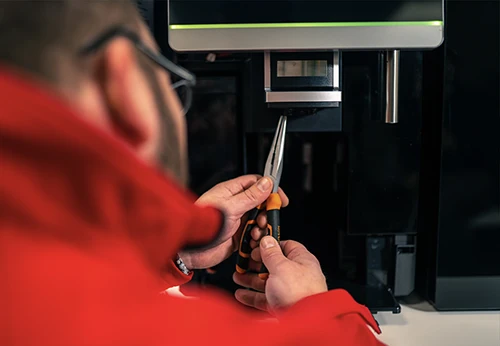
A commercial coffee machine is a working piece of equipment. It runs all day, handles milk, water and ground coffee, and it needs proper care to keep producing good drinks. When servicing is done well, you barely notice it. When it’s neglected, you notice straight away: the coffee tastes off, the machine slows down, and eventually it stops altogether on the busiest morning of the week.
This guide explains how commercial coffee machine servicing works, what a proper service visit covers, and why a regular schedule saves a business far more than it costs. It’s written for office managers and facilities teams across Manchester and the wider UK who want their coffee setup to simply work.
How Often Should a Commercial Coffee Machine Be Serviced?
There’s no single answer for every machine, because it depends on how hard the machine works. A unit pouring 150 drinks a day in a busy office needs far more attention than one used occasionally in a small meeting room. As a rule of thumb, the busier the machine, the more frequent the servicing.
For most office environments, weekly servicing is the gold standard. A weekly visit keeps milk systems clean, grinder settings accurate and the machine calibrated, which is what keeps every cup tasting the way it should. Lighter schedules such as monthly or quarterly maintenance can work for low-volume settings, but they leave more room for problems to build up unnoticed between visits.
At Cuco Coffee, every package includes a weekly service visit as standard. That proactive approach is strategic: it’s far easier to keep a machine running well than to recover one that’s been left too long.
What Does a Coffee Machine Service Actually Include?
A proper service is more than a quick wipe-down. A thorough visit should cover the parts of the machine that affect both hygiene and drink quality. Here is what a complete weekly service involves:
- A full deep clean of the machine, inside and out, so nothing affects the taste of the coffee.
- Milk system cleaning, which is where hygiene problems and off flavours most often start.
- Internal maintenance checks to spot wear or developing faults early.
- Calibration and optimisation, keeping grinder settings and extraction consistent.
- A stock check so beans, cups and other consumables are topped up before they run out.
- A consistency check to confirm every drink is coming out as it should.
That last point is the difference between a machine that’s technically working and one that’s genuinely producing great coffee. Regular calibration is what stops the slow drift in quality that busy machines suffer when they’re left unattended.
The Real Cost of Machine Downtime
It’s easy to think of servicing as an expense and downtime as an inconvenience. In a busy workplace, it’s the other way round. A machine that breaks down mid-week doesn’t just stop the coffee. It sends people out to the nearest cafe, interrupts the working day and quietly chips away at one of the small things that makes an office a good place to be.
The cost isn’t only the repair bill. It’s the lost time, the disruption, and the frustration of a perk that suddenly isn’t there. Regular servicing is what prevents most of those breakdowns in the first place, because the small faults that cause them get caught and fixed before they escalate. Reactive maintenance, where you only get help after something fails, leaves you exposed to exactly the gaps that proactive servicing closes.
Professional Servicing vs In-House Maintenance
Your team can and should handle the basics: refilling beans, emptying the drip tray, giving surfaces a wipe. But there’s a clear line between everyday upkeep and proper servicing, and it helps to know where it sits.
| Task | Your team | Professional service |
|---|---|---|
| Refilling beans and consumables | Yes | Topped up during visits |
| Emptying the drip tray | Yes | Checked during visits |
| Deep cleaning the machine | No | Yes |
| Milk system deep clean | No | Yes |
| Calibration and optimisation | No | Yes |
| Internal checks and early fault detection | No | Yes |
| Repairs and call-outs | No | Yes |
The everyday tasks keep the machine ticking over between visits. The professional service is what protects drink quality, hygiene and the long-term health of the machine. Trying to cover the second list in-house usually ends in inconsistent coffee and avoidable faults.
How Regular Servicing Extends Machine Lifespan
Coffee machines wear in predictable ways. Limescale builds up, milk lines need regular cleaning, seals and parts age, and grinders drift out of calibration. Left alone, these small issues compound and shorten the working life of the machine. Addressed on a regular schedule, they stay manageable.
Weekly attention means components are cleaned and checked before they cause damage, and minor wear is dealt with before it spreads. A well-maintained machine holds its performance for far longer, which is better for your coffee and better for the equipment.
What to Expect From a Good Service Provider
Not all servicing is equal. When you’re assessing how a machine will be looked after, a few things separate a dependable provider from a frustrating one.
In-house engineers rather than third parties
A provider that services machines with its own trained team can respond faster and knows the equipment thoroughly. Outsourced contractors add a step every time you need help. Cuco Coffee carries out servicing in-house, which keeps response times short and accountability clear.
Fast response when something goes wrong
Between scheduled visits, problems still happen. What matters is how quickly they’re resolved. Cuco Coffee provides rapid-response support and typically attends within one to two hours in core service areas, so a fault rarely means a day without coffee.
Servicing included, not billed per visit
With Cuco Coffee, weekly servicing, maintenance, repairs, emergency call-outs, cleaning products and filters are all free of charge. The only costs are the monthly rental fee and whatever coffee you order. There’s no call-out fee hanging over every small issue, which is what keeps machines properly maintained rather than neglected.
The Cuco Coffee Approach to Servicing
Cuco Coffee built its whole service around removing the hassle of office coffee. The model is simple and runs to a clear plan from the first visit onward:
- Site survey and installation, with the machine set up and connected where it needs to be.
- Simple training so your team knows the basics, like refilling beans and emptying the drip tray.
- Weekly servicing that deep cleans the machine, checks it is running smoothly and restocks supplies.
- Fast call outs when something needs attention between scheduled visits.
Everything beyond the basics is handled by the Cuco team, so your staff just use the machine and enjoy the coffee. Based in Manchester and serving businesses across the UK, the focus is on consistent drinks, fewer surprises and less disruption.
Frequently Asked Questions
How often should a commercial coffee machine be serviced?
It depends on how heavily the machine is used, but for most busy offices weekly servicing is the gold standard. A weekly visit keeps milk systems clean, grinders calibrated and drink quality consistent. Cuco Coffee includes a weekly service visit in every package.
What does a coffee machine service include?
A thorough service covers a full deep clean of the machine, milk system cleaning, internal maintenance checks, calibration and optimisation, a stock check, and a consistency check to confirm every drink is coming out correctly. It’s about hygiene and drink quality, not just appearance.
What happens if my machine breaks down between service visits?
A good provider responds quickly. Cuco Coffee offers rapid-response support with free emergency call-outs and typically attends within one to two hours in core service areas, so a breakdown rarely leaves your team without coffee for long.
Is servicing included in coffee machine rental?
With Cuco Coffee, yes. Weekly servicing, maintenance, repairs, emergency call-outs, cleaning products and filters are all free of charge, with the monthly rental fee and whatever coffee you order being the only costs. There are no separate call-out charges to worry about.
Does Cuco Coffee use third-party contractors for servicing?
No. Servicing is carried out by Cuco Coffee’s own in-house team. That means faster response times, clearer accountability and engineers who know the machines thoroughly.
Can my team maintain the machine ourselves?
Your team handles the basics, like refilling beans and emptying the drip tray, and Cuco provides simple training for that. Everything else, including deep cleaning, calibration and repairs, is handled during the weekly service visit.
Want coffee that just works, week after week?
Cuco Coffee provides bean-to-cup machines with weekly in-house servicing for businesses in Manchester and across the UK. To talk through your setup, call 0161 394 0703 or get in touch through cucocoffee.co.uk.


