Step 2: Think About Your Space and Setup
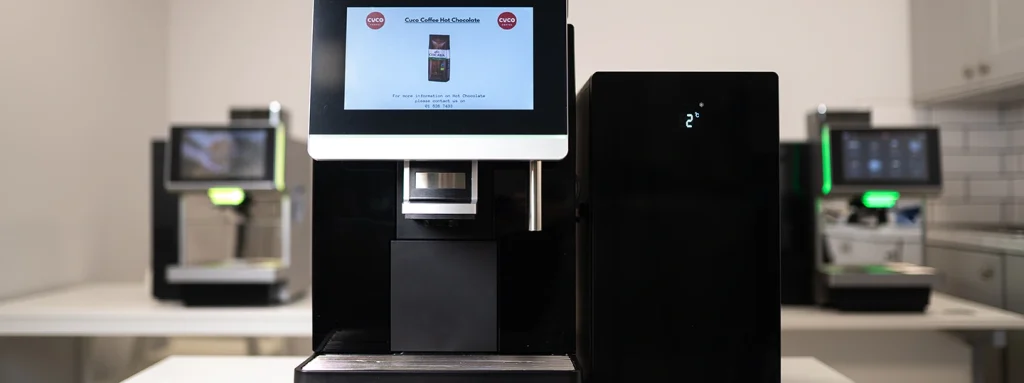
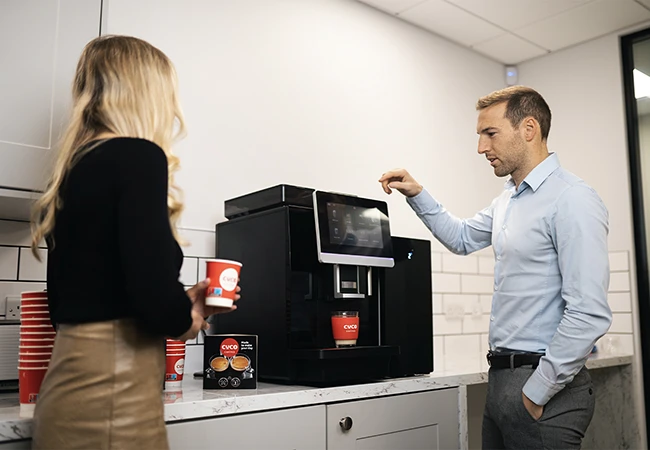
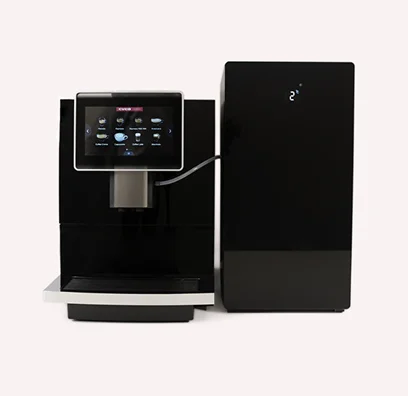
Coffee machines do not need a huge amount of room, but they do need the right kind of space. Before you commit to anything, walk over to where the machine is going to live and check a few practical things.
Counter space and clearance
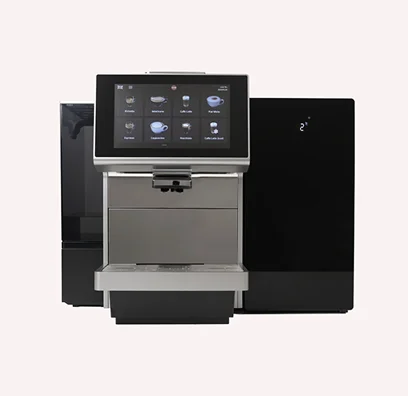
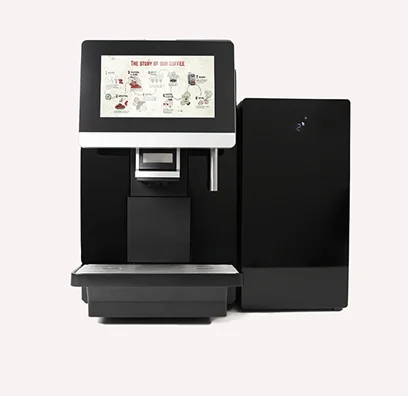
A commercial bean to cup machine needs enough counter depth to sit back from the edge, and enough width on either side to load cups and beans without banging into walls or other appliances. You also need clearance above for the bean hopper. It sounds obvious, but we have seen offices try to squeeze machines into spots that left no room to actually refill them. When we visit your workplace for a free tasting, we will check all of this before recommending a model, so you do not end up with something that does not fit.
Power and water
All our machines run on a standard UK mains plug, so there is no complicated wiring to think about. Water is the part that catches people out. Some machines need a plumbed-in water supply. Others work off a tank that your team tops up. Plumbed machines are more convenient for high-volume sites because nobody has to remember to refill anything. Tank machines are easier to install and move around, which suits offices with less accessible plumbing.
Both options work well. The right choice depends on where the machine is going and how heavily it will be used. We will talk you through which setup fits your space when we visit.
Flow of traffic
This one is often overlooked. Put the machine somewhere people can reach without cutting through a workspace, crossing a meeting room, or creating a queue that blocks a corridor. The ideal spot is a kitchen or break area where people already go naturally. A side bench in a quiet corner of the main office also works well. Putting it anywhere that creates a bottleneck will cause friction, and your team will notice.
Step 3: Match the Drink Range to Your Team
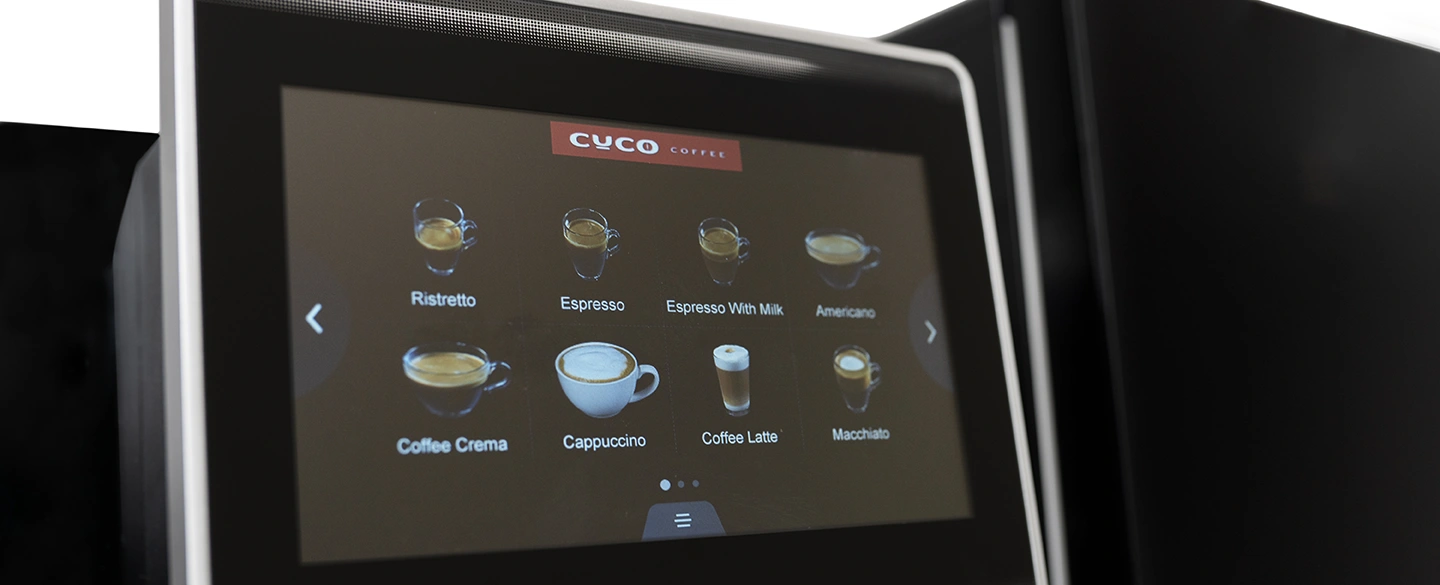
Once you have size and space sorted, think about what your team actually drinks. This is where a lot of decisions quietly go wrong. A machine that only does espresso and Americano will leave half your office unhappy in a culture where flat whites, lattes, and iced coffees are the standard request.
All our machines serve the core range: espresso, Americano, cappuccino, latte, flat white, and macchiato, along with a choice of strengths and milk options. The Cuco 200 adds more variation, including hot chocolate and a wider menu of speciality drinks, which can be useful if you have a varied team or regularly welcome visitors.
A couple of things to check with your team before deciding:
Step 4: Decide How You Want to Pay for It
Once you know which machine suits your team, the next question is how to get it. There are three options: renting, leasing, or buying outright. We covered the full comparison in our guide to coffee machine rental, lease, and purchase, but here is the short version.
Rental is the most flexible option. A monthly fee covers the machine, weekly servicing, and usually everything else you need to keep it running. You do not own the machine, but you also do not have to worry about anything going wrong with it.
Leasing works like a long-term finance agreement. You commit to a fixed term, usually three to five years, and often have the option to buy the machine at the end. Servicing may or may not be included depending on the agreement.
Buying means paying the full cost upfront. The machine is yours from day one. All servicing, maintenance, and repairs become your responsibility.
For most offices, rental makes the most sense. The cost is predictable, the hassle is minimal, and if your needs change, you are not locked into equipment that no longer fits. Our rental contracts start at three months, so there is no long commitment to worry about.
Step 5: Check the Service and Support
This is the part of the decision that too many businesses overlook, and it is the one that will affect you most once the machine is installed. A good machine poorly serviced will frustrate your team. An average machine well serviced will run reliably for years. Service is where the real difference between suppliers shows up.
Here are the things worth asking about before you sign anything:
Is servicing included, and how often?
Weekly servicing is the standard we work to. Every machine we install gets a visit from our own engineers every week to clean it, descale it where needed, replace filters, check the components, and restock beans and supplies. Some suppliers offer monthly or quarterly servicing, which is fine for light-use machines but not enough for a busy office. Find out the visit frequency before you commit.
Who actually does the servicing?
A lot of coffee machine suppliers subcontract their servicing to third-party engineers. That works until it does not. When something breaks, you end up waiting for a contractor who does not know the machine, the supplier, or your office. At Cuco, our servicing is done by our own team. The person who looks after your machine every week is a Cuco employee, trained on our range, and familiar with your office. That is the difference between service that works and service that just exists on paper. There is another cost that rarely gets mentioned. Some suppliers leave the cleaning cycles to the customer, which means somebody in your office standing at the machine for thirty minutes, away from the work they are actually paid to do. Our engineers handle that on the weekly visit.
What happens when something goes wrong?
No machine is perfect. They occasionally throw errors, develop faults, or need parts replaced. The real test of a supplier is how quickly they respond when that happens. Find out what the response time is, whether repairs are included in your contract or billed separately, and whether there is a backup machine available if yours is out of action for more than a day.
Can you try the coffee before signing up?
You would not commit to a car without a test drive. The same principle applies to an office coffee machine. Any supplier worth working with should offer a free tasting at your workplace. It lets you try the machines, sample the blends, and see how your team responds. At Cuco, we bring the machine, the coffee, and the expertise to your office. You tell us what you like, and we recommend a setup that fits. There is no pressure to commit on the spot.
Cuco 50 vs Cuco 100 vs Cuco 200: At a Glance
The easiest way to compare our three machines is to see them side by side. This table covers the main differences. If anything is unclear, the free tasting is the best next step.
| Cuco 50 | Cuco 100 | Cuco 200 | |
|---|---|---|---|
| Daily capacity | Up to 50 cups | 100 to 150 cups | Up to 200 cups |
| Speciality drinks | 24 | 24 | 32 |
| Ideal team size | 15 to 25 people | 30 to 50 people | 70+ people |
| Best suited to | Small offices, meeting rooms, reception areas | Medium offices, showrooms, canteens | Large workplaces, high-traffic sites, client-facing spaces |
| Pairs well with | Acts as secondary machine in larger offices | Good standalone option for most workplaces | Often paired with a Cuco 50 for secondary areas |
| Hot chocolate | No | No | Yes |
| Servicing included | Fortnightly | Weekly | Weekly |
A Quick Word on the Coffee Itself
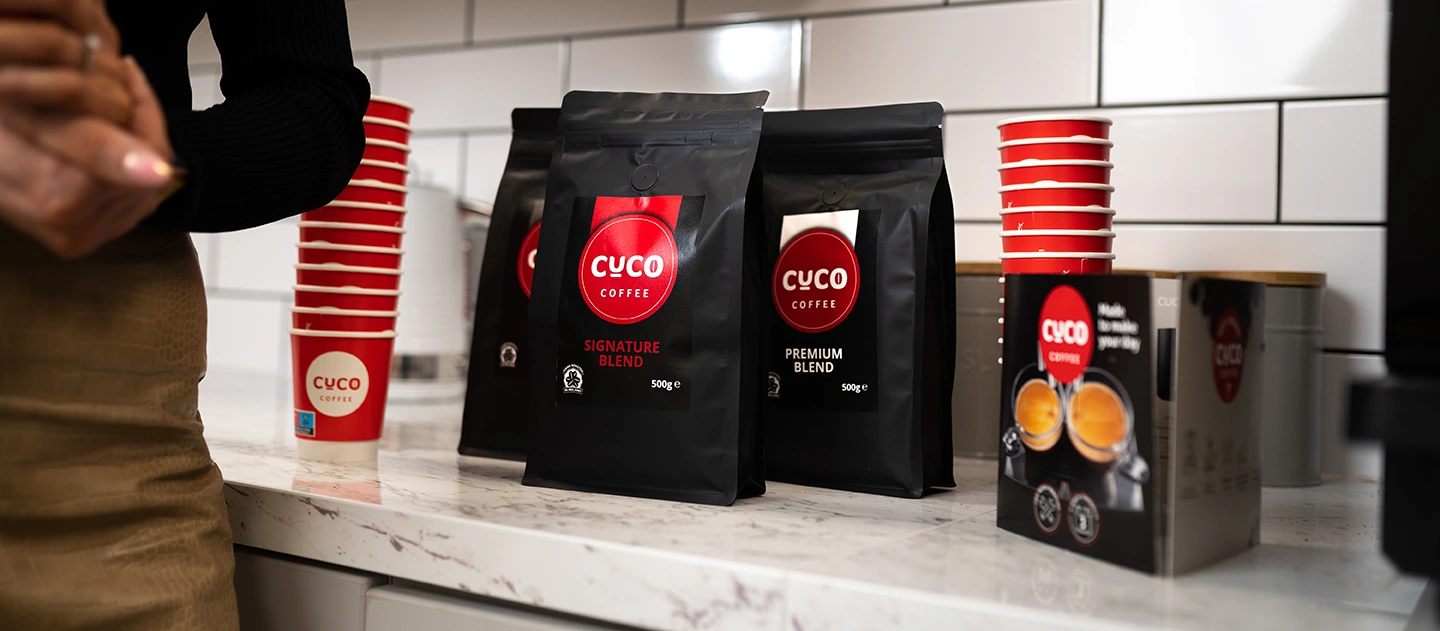
The machine is only half the story. The beans that go into it matter just as much. All our rentals come with a choice of our own blends, roasted exclusively for Cuco customers. There are four to pick from: Signature, Premium, Café, and Cremosa Single Origin. Each has its own character, and the right one for your office really comes down to taste.
When we visit for the tasting, we will bring all four and let your team try them. We also offer a free one-week trial, not just a tasting. The machine stays on site for the whole week, and we deliver several bags of coffee and hot chocolate with it, so your team can live with the machine rather than sample it once. Most offices settle on one favourite quickly. Some rotate between two. There is no right answer, and you can change blends later if your preferences shift.
Ready to Choose the Right Machine for Your Workplace?
If you have read this far, you probably have a pretty good idea of which machine suits your team. The next step is to see it in person. We will visit your office, bring the machines and the coffee, and talk through the setup that fits your space, your team, and your usage.
No sales pitch. Just a tasting, a chat, and an honest recommendation. If Cuco is right for you, we will sort the rest. If we are not the right fit, we will tell you so.
Get in touch today to book your free coffee tasting, or give us a call on 0161 394 0703 to chat through your options.